
CRISTAL tests solar panels before monitoring ice
ESA announces tests of its future polar altimetry satellite. Launch is targeted for late 2027 or early 2028.
RockGeo Editorial · Published on
Event date: 10/26/2026 · Source date: 10/26/2026
Sources accessed on 10/26/2026, 20:05 GMT
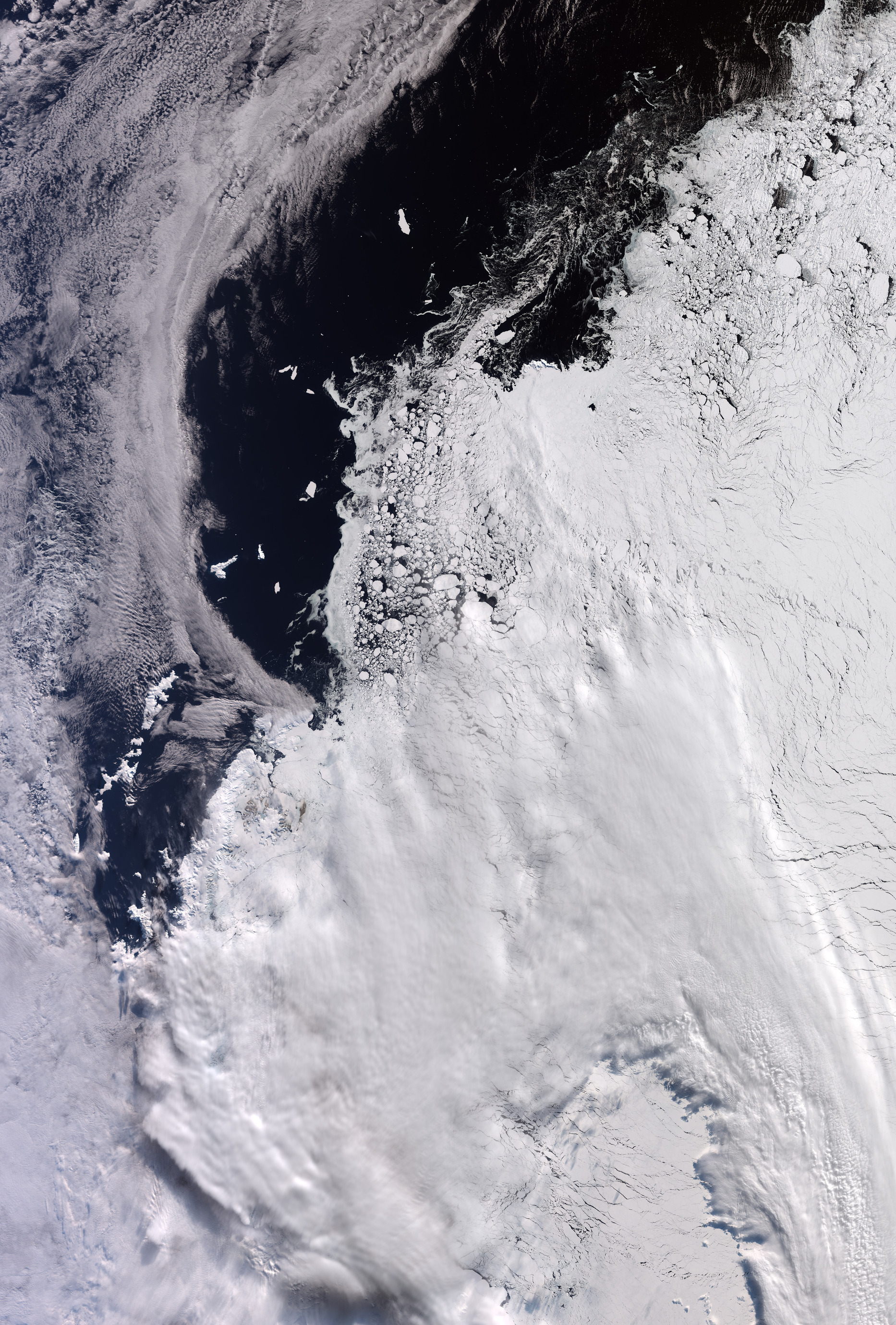
contains modified Copernicus Sentinel data (2026), processed by ESA; CC BY-SA 3.0 IGO — https://creativecommons.org/licenses/by-sa/3.0/igo/ · CC BY-SA 3.0 IGO
On 26 October 2026 ESA announced progress in testing CRISTAL, a future European satellite dedicated to ice and snow. Assembly finished in September at Airbus facilities in Friedrichshafen, Germany. The first solar panel deployment trial checked mechanisms and software sequences that will need to work together in orbit.
Working with launch provider AVIO, the team also checked the fit on the adapter securing the satellite to the rocket and its separation mechanism. An intermediate review examined qualification of equipment, instruments and subsystems before testing the complete spacecraft. These steps demonstrate preparation progress, but do not yet amount to operation in space.
CRISTAL stands for Copernicus Polar Ice and Snow Topography Altimeter. Its payload includes the IRIS interferometric radar altimeter and a microwave radiometer. The radar will use two frequencies: approximately 13.5 GHz in Ku band and 35.75 GHz in Ka band. The aim is to measure sea-ice thickness, snow over it, and the height of ice sheets and glaciers.
According to Copernicus technical documentation, dual-frequency operation should improve measurements relative to earlier altimeters. The data could support polar maritime activities and monitoring of the cryosphere to study climate variability. These are planned mission capabilities: the specifications are not observation results already obtained by CRISTAL.
The next step will be moving the satellite to ESA’s establishment in the Netherlands, where it is expected to spend much of 2027 in environmental tests. The announced launch window is late 2027 to early 2028, still a forecast. Continuity of records also envisages CRISTAL-B near the end of CRISTAL-A’s operational lifetime.