
Antarctic sea ice records its third-lowest maximum in 2026
NASA’s October 12 analysis reports a likely maximum of 17.59 million km² on September 14. The satellite-data map distinguishes extent from the area actually covered by ice.
RockGeo Editorial · Published on
Event date: 09/14/2026 · Source date: 10/12/2026
Sources accessed on 10/12/2026, 15:07 GMT
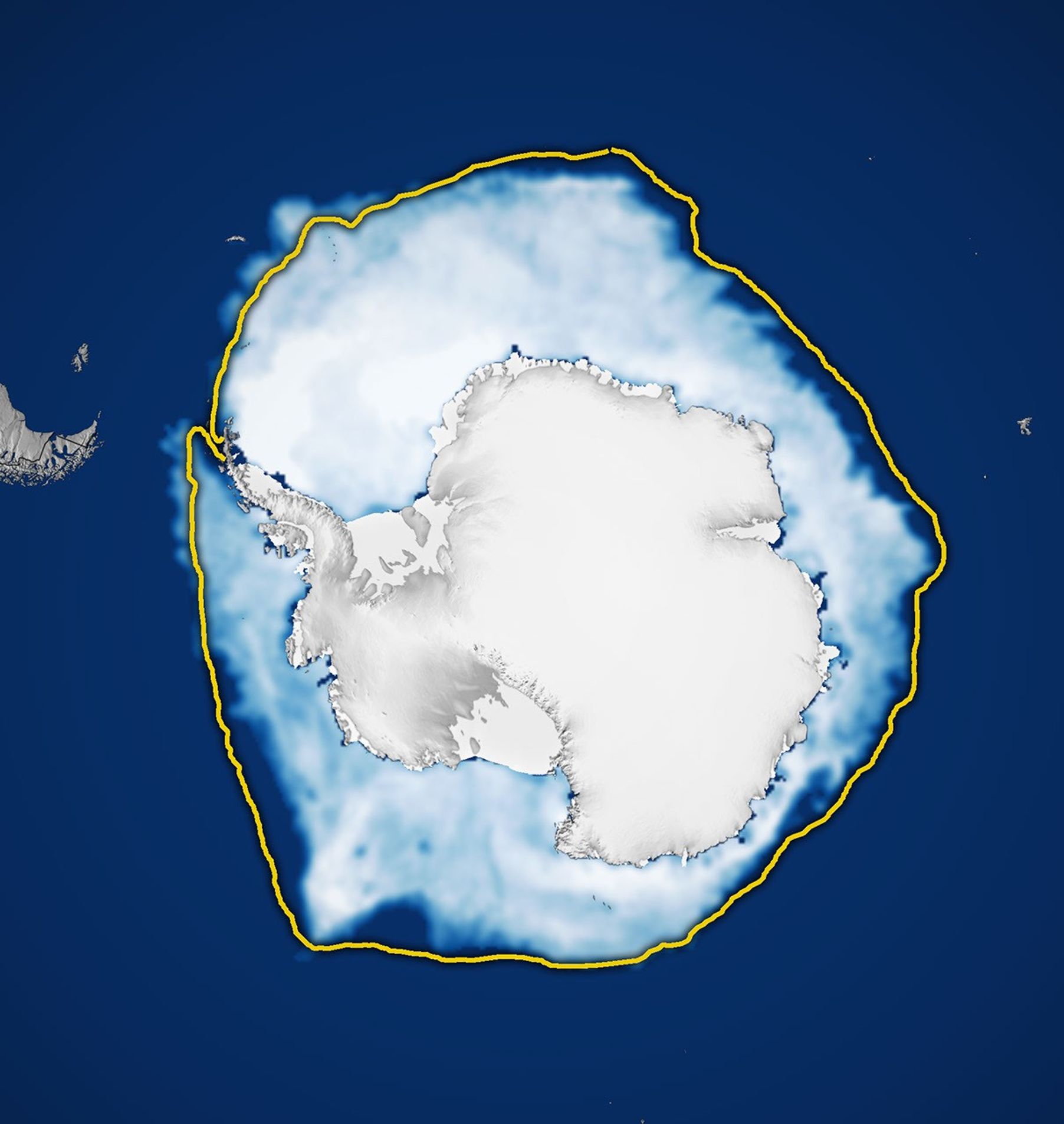
NASA Earth Observatory / Michala Garrison; NSIDC · NASA Media Usage Guidelines
NASA Earth Observatory published an analysis of the annual Antarctic sea ice maximum on October 12, 2026. According to NASA and NSIDC, extent likely reached 17.59 million km² on September 14, the third-lowest maximum in the satellite observation record.
The cycle follows Southern Hemisphere seasons: ice generally reaches its maximum in September and minimum in February. Antarctica is a continent surrounded by ocean, allowing extensive winter expansion. As this ice reaches warmer latitudes, it becomes more exposed to summer melting.
Measurements use passive microwave sensors, which record energy naturally emitted by Earth. The contrast between ice and water makes it possible to track coverage even through clouds. Continuous observations are essential for comparing years; the record began in late 1978.
Ice extent and ice area are different indicators. NSIDC adds the entire area of grid cells with at least 15% ice concentration to calculate extent. Area instead accounts for the covered fraction of each cell. Thus, an extent of 17.59 million km² does not mean complete ice coverage.
The official map shows September 14 conditions, with the 1981–2010 median in yellow. NASA describes declining coverage since 2016, interrupted by small rebounds. Tracking multiple years helps investigate persistent changes without confusing a seasonal maximum with continuous growth.
NSIDC’s September announcement stressed that large fluctuations near the peak can delay confident identification of the maximum date. NASA’s analysis retains the wording of a likely maximum. Today’s publication concerns a September observation; it does not represent current coverage or remove this timing uncertainty.