
Mayon: alert level 3 after explosion and further ash emission
PHIVOLCS raised the alert in Albay, Philippines. Cameras recorded another plume; the 6 km danger zone remains restricted.
RockGeo Editorial · Published on
Event date: 10/30/2026 · Source date: 10/30/2026
Sources accessed on 10/31/2026, 20:02 GMT
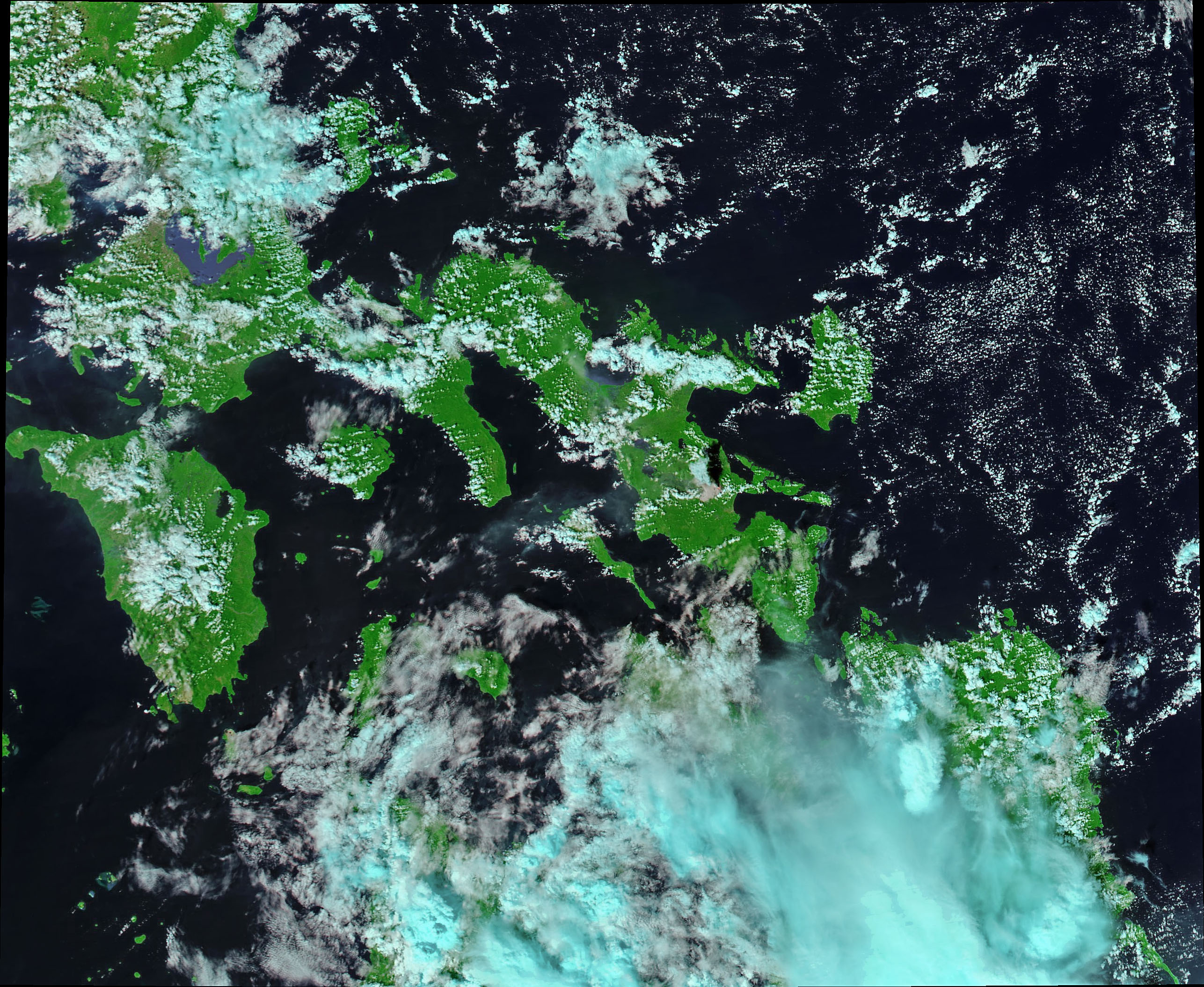
NASA Earth Observatory / Joshua Stevens; MODIS data: LANCE/EOSDIS Rapid Response · NASA media usage guidelines — editorial / informational use
PHIVOLCS raised the alert for Mayon Volcano in Albay, on the Philippine island of Luzon, from 2 to 3 after a moderately explosive eruption on October 30, 2026, at 03:53 GMT. Its 04:30 GMT bulletin describes a dense ash column reaching 3,000 m above the crater and dispersing west-southwest.
A later emission was recorded at 21:17 GMT on October 30, according to a GMA News report credited to its newsroom and marked with the initials KG. Cameras at Ligao and Ligñon Hill stations showed a plume rising up to 200 m above the crater, also drifting west-southwest. Alert level 3 remained in force.
GMA attributes 15 volcanic earthquakes and 30 rockfall events on Friday to the next PHIVOLCS bulletin, and reports that the explosion lasted six minutes. These are different kinds of observations: seismic and visual records describe activity, but these counts alone do not establish the size of a future eruption.
The institute interprets the episode as a new phase of magmatic eruption, with possible lava flows and pyroclastic density currents on the upper and middle slopes in the following days or weeks. It recommends evacuating the 6 km radius permanent danger zone, watching channels susceptible to lahars and avoiding flights near the summit. These are hazard assessments, not confirmation that every phenomenon occurred.
The image accompanying this article is an archive from January 22, 2018, not an observation of the current crisis. Aqua’s MODIS recorded the region; NASA presents a bands 7-2-1 composite combining natural-colour and infrared data. Date and processing matter: the visualization provides volcanic context without measuring the plume or hazards of October 2026.