
Copper sulphides found beyond Mt Chalmers; grades remain unknown
QMines announced 11 m of visually identified mineralisation in a hole about 180 m beyond the Mt Chalmers resource. Laboratory assays and continuity testing are still required.
RockGeo Editorial · Published on
Event date: 10/12/2026 · Source date: 10/12/2026
Sources accessed on 10/12/2026, 20:10 GMT
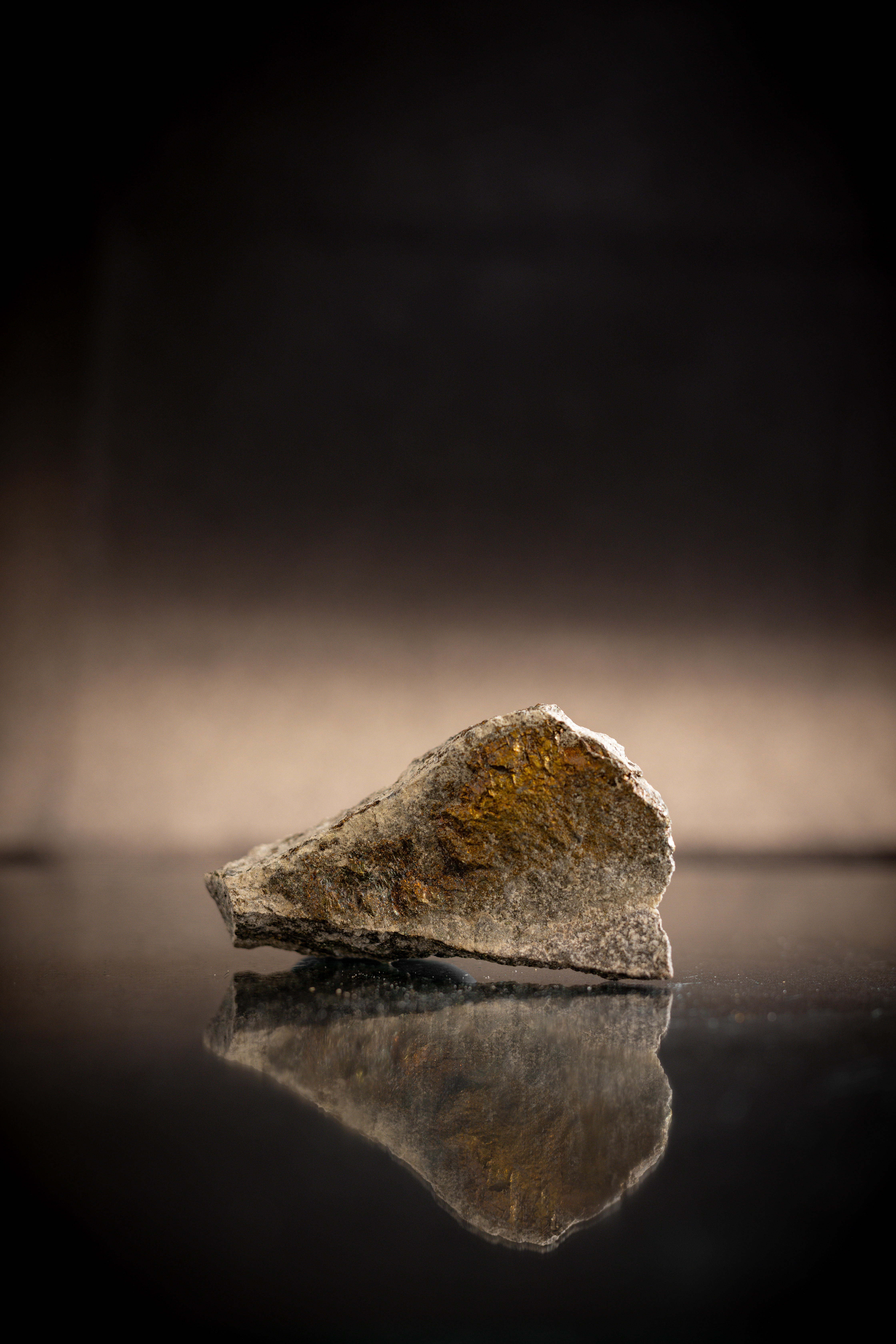
USGS / Office of Communications · Public Domain
QMines announced on October 12, 2026 an intersection of approximately 11 m of visually identified sulphides in diamond hole 26MCDD052. The location is about 180 m north-northeast of the Mt Chalmers Mineral Resource boundary in Queensland, Australia. The result provides a target for investigation.
The company describes chalcopyrite and pyrite veins, including semi-massive sections, approximately 167 m below surface. The assemblage was compared with stringer mineralisation logged beneath massive sulphide lenses at the deposit. This similarity supports a geological interpretation but does not measure copper or gold concentration.
Laboratory results are expected in late October, according to the announcement. Metal grades, true width and continuity remain unknown. The reported length was measured downhole; it does not automatically equal the thickness perpendicular to the mineralised body. Visual estimates do not replace chemical analyses.
The JORC Code distinguishes Exploration Results from declarations of Mineral Resources and Ore Reserves. Initial information can guide further work without supporting reliable tonnage and grade estimates. The code also requires qualification when true width is unknown and reporting that does not unreasonably imply an economically viable discovery.
QMines considers three possibilities: an extension of the main lode, a separate north-northeast-trending zone, or mineralisation associated with Botos. Follow-up drilling is underway. Orientation, width and connections between these areas require testing; none of the hypotheses is presented here as demonstrated continuity.
The article’s photograph shows a chalcopyrite specimen from the USGS mineral collection, used only as mineralogical context. It is not core from hole 26MCDD052 or a Mt Chalmers sample. Correct image attribution preserves the distinction between illustrating a mineral and providing evidence specific to the drilling.