
Kīlauea develops a small lava flow; summit remains pressurised
The October 11 USGS bulletin records a tube-fed flow from the north vent. WATCH/ORANGE remains in place, and the next lava-fountaining episode cannot be forecast with confidence.
RockGeo Editorial · Published on
Event date: 10/11/2026 · Source date: 10/11/2026
Sources accessed on 10/11/2026, 20:03 GMT
USGS / Hawaiian Volcano Observatory — V3cam · Public Domain
The USGS Hawaiian Volcano Observatory reported at 19:42 GMT on October 11, 2026 that Kīlauea’s north vent was feeding a small pāhoehoe lava flow through a tube. Continuous activity began around 09:15 GMT, following intermittent ejection of lava fragments.
The flow advanced a few hundred metres down the vent shield and remained active during the morning observation in Hawaiʻi. In the preceding 24 hours, the observatory located 26 shallow earthquakes at the summit. The Uēkahuna tiltmeter recorded a 0.3-microradian increase in tilt.
The interpretation combines camera images, earthquakes and ground deformation. According to HVO, the overflow indicates that the top of the magma column in the north vent is at the surface. The East and Southwest Rift Zones had low rates of seismicity and deformation.
Irregular deformation patterns since episode 54 on August 25 prevent modelling when the next lava-fountaining phase will occur. Further fountains, intrusion beneath the caldera or passive discharge through fractures are possibilities. The bulletin does not establish which one will occur.
The alert level remains WATCH and the aviation colour code ORANGE. The USGS system separates conditions relevant to people on the ground from airborne ash hazards. WATCH can describe heightened unrest with eruption potential and uncertain timing, or an eruption underway with limited hazards; it is not a countdown.
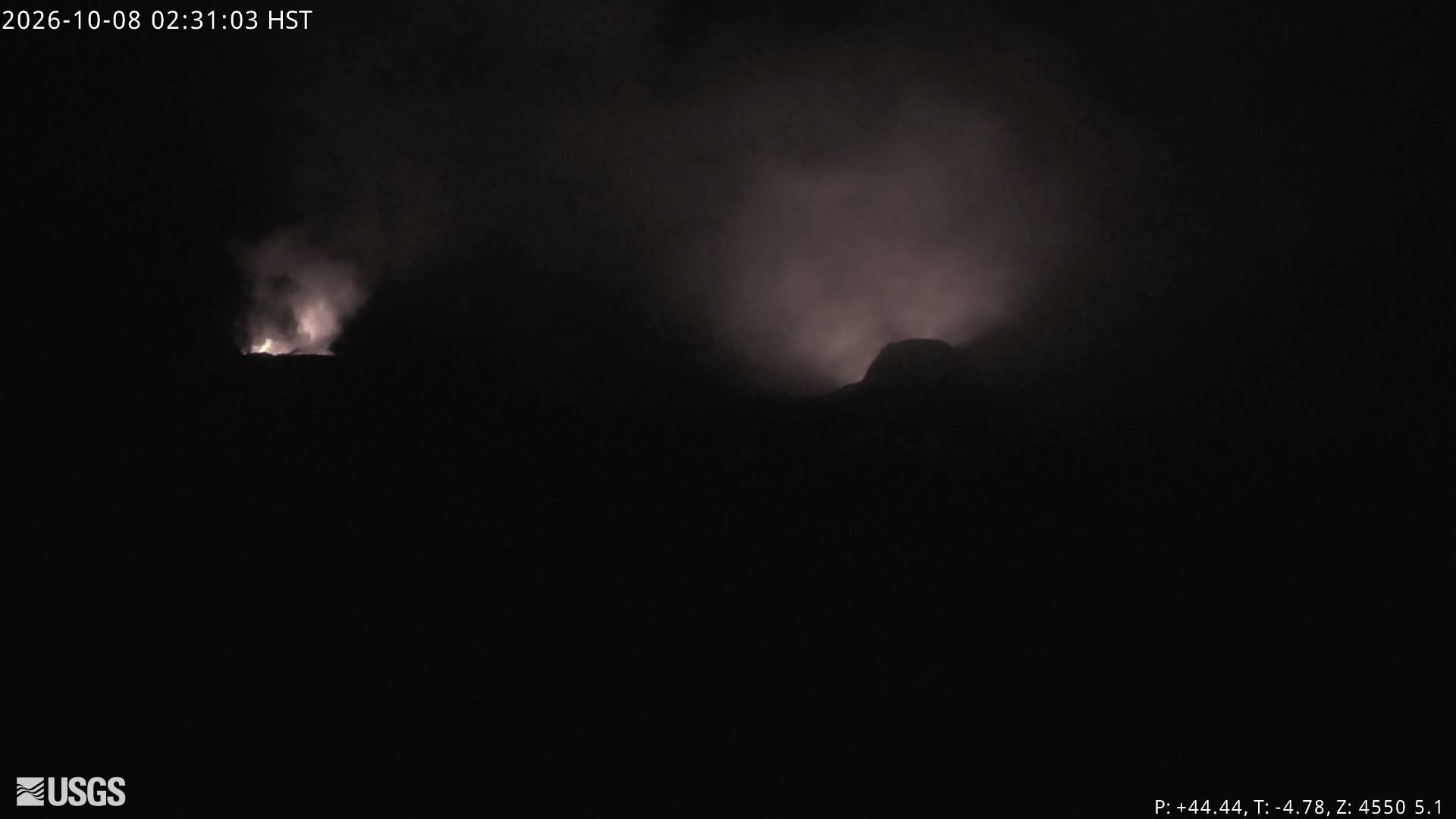
The official image accompanying this article was recorded by V3cam on October 8, before the new flow. It shows glow and flames at the vents; USGS considers hydrogen combustion an explanation for these flames. This visual record provides context but does not demonstrate the October 11 development.