
Eskay completes drilling and mapping; certified assays pending
The Canadian campaign comprised ten holes, 45 mapping days and 346 georeferenced photographs. The company awaits certified assays before reporting results.
RockGeo Editorial · Published on
Event date: 10/14/2026 · Source date: 10/14/2026
Sources accessed on 10/14/2026, 20:00 GMT
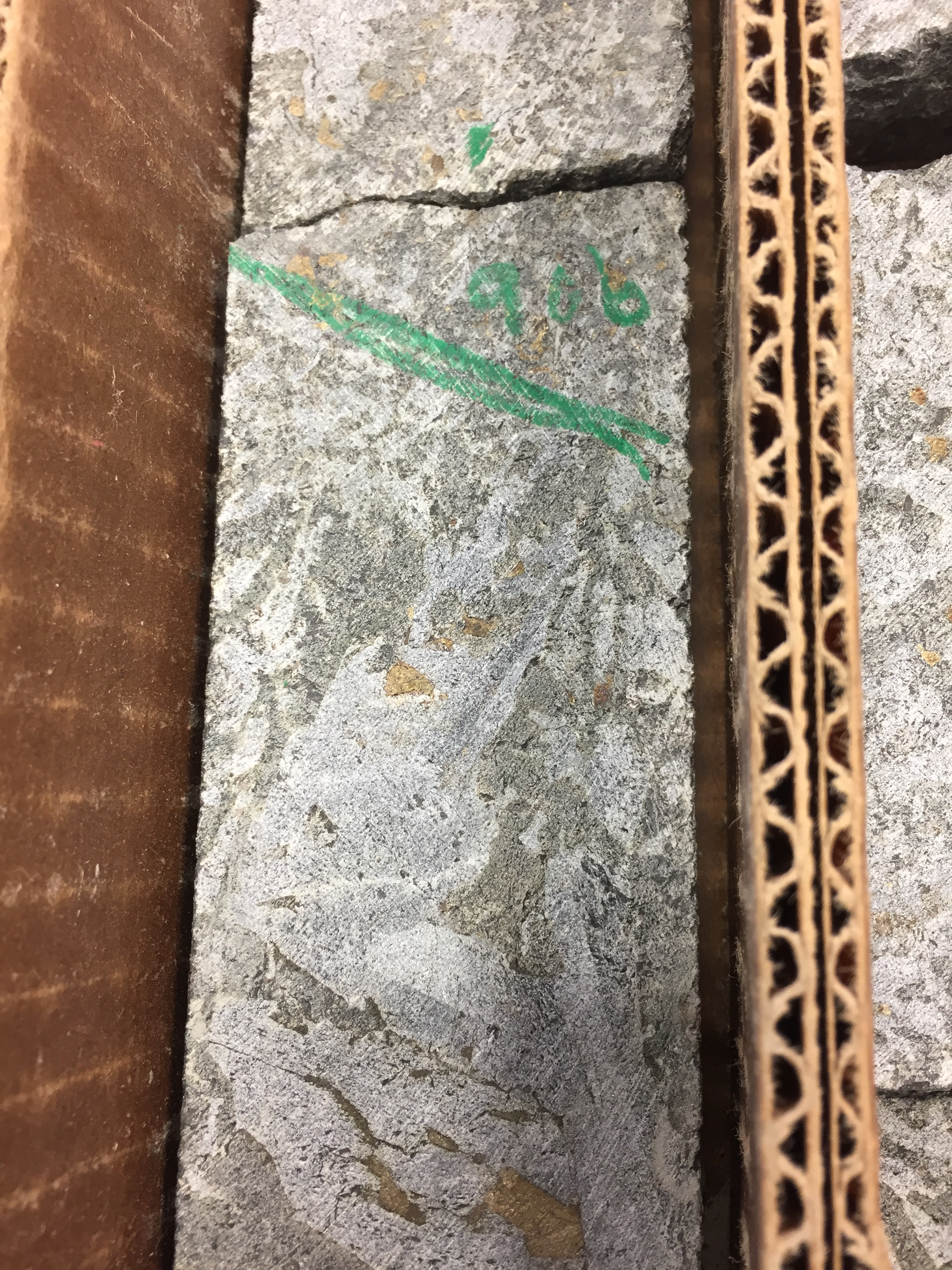
USGS / Michael Zientek · Public Domain
Eskay Mining announced completion of its Corey-Eskay campaign in British Columbia’s Golden Triangle, Canada, on October 14, 2026. Between July 20 and September 16, ten diamond holes totalling 4,344 m were drilled at C-10, Vermillion, TM, Big Red and Sultan. The announcement describes completed work without presenting new certified grades.
Mapping spanned 45 days and included 159 surface rock samples and 346 georeferenced photographs. All surface samples were sent to ALS. Of 1,509 core samples, 553 were analysed at the company’s uncertified Stewart laboratory; the remainder went to ALS in Vancouver.
According to the release, selected material was also sent to ALS for repeat analysis. The company expects certified assays over the next few months before reporting results. Chief geologist Clinton Smyth, a qualified person under NI 43-101, reviewed the technical content. That review does not replace pending laboratory results or demonstrate economic viability.
For methodological context, the USGS Core Research Center preserves cores, drill cuttings and thin sections for reuse by researchers and educators from government, industry and universities. Such collections highlight the importance of keeping physical material available for further investigations alongside digital records. This reference is not an assessment of the Eskay project.
The photograph shows textures in drill core documented by USGS, credited to Michael Zientek and published approximately in 2017. It is a context image, not a sample from the Canadian campaign. Original colours and framing were preserved; the photograph cannot establish composition, grade or results for Eskay material.